“Opening Your Heart, Being Vulnerable.” At La Scala, Pina Bausch’s “Le Sacre” through the Eyes of Jo Endicott

“Opening Your Heart, Being Vulnerable.” At La Scala, Pina Bausch’s “Le Sacre” through the Eyes of Jo Endicott
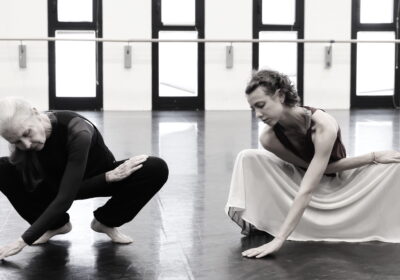
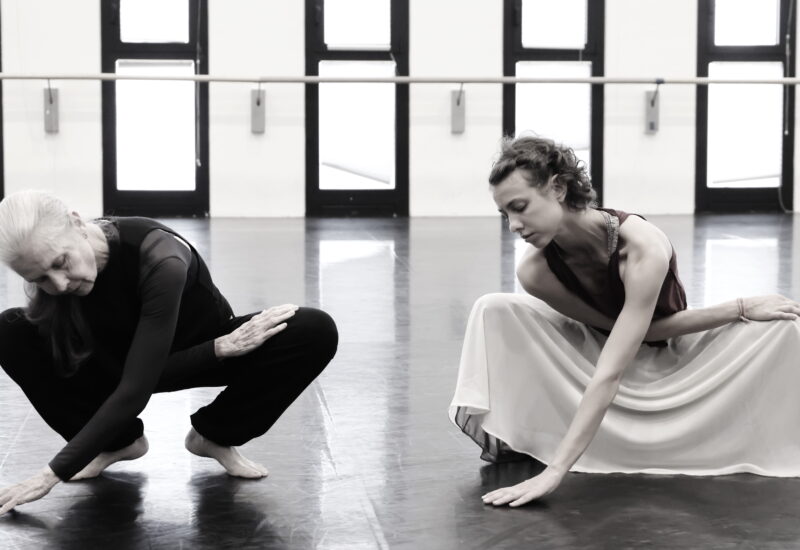
Josephine Ann Endicott in rehearsal with Agnese Di Clemente ph Brescia and Amisano © Teatro alla Scala

Many people simply call her Jo, but Josephine Ann Endicott, the Australian dancer, is one of the most significant figures in the history of Pina Bausch’s Tanztheater. I met her in Milan, at Teatro alla Scala, where she was working with the company’s thirty dancers, passing on the language and choreographic legacy of Le Sacre du Printemps, the masterpiece Pina Bausch created in 1975. The production is on stage until 21 November as the second work in the Balanchine Bausch Stravinsky double bill. Born in Sydney, Endicott is a woman with delicate features, intelligent eyes and a sparkling sense of irony. She trained in classical ballet at the Australian Ballet School in Melbourne. In 1973, encouraged by Rudolf Nureyev to move to Europe, she met Pina Bausch (1940–2009) in London. It was a decisive encounter: deeply impressed by the choreographer’s personality and artistic vision, Endicott accepted an invitation, at just 23 years of age, to join her company, Tanztheater Wuppertal, where she remained until 1987.During those years, she performed several memorable roles, including that of the Chosen One in The Riteof Spring.Endicott embodied precisely the kind of performer Pina Bausch was looking for: a dancer with extraordinary expressive abilities, an artist capable of conveying emotions, contradictions, vulnerabilities, desires and fears. Someone able to move between opposing emotional registers, from vulnerability to violence, from seduction to irony, from drama to paradox. After returning to Tanztheater Wuppertal in 1994, Endicott has, since 1997, played a crucial role in preserving and passing on Bausch’s artistic legacy, working closely with the Pina Bausch Foundation, headed by Salomon Bausch, the choreographer’s only son. It was Salomon Bausch himself who inaugurated the exhibition Le Sacre du Printemps at the Teatro alla Scala’s Ridotto dei Palchi Arturo Toscanini, where it remains open until 22 November.In addition to offering the public an open rehearsal with the dancers of La Scala on 29 October, which was streamed on the theatre’s YouTube channel, Josephine Ann Endicott also agreed to answer my questions by email. A precious opportunity to capture, through her own words, another fragment of dance history.

Josephine, you trained at the Australian Ballet School in Melbourne, but in London in 1973 you met Pina Bausch, an encounter that changed your life. I imagine you understand very well how challenging it can be to move from a classical style to something as visceral, powerful and grounded as Bausch’s The Rite of Spring. What were the greatest challenges the La Scala dancers had to face while rehearsing with you?

It is a process, and it takes as long as it needs for the dancers to understand what we are searching for. It is about learning to let go and allowing yourself simply to be in the way you stand, walk or run. It means freeing yourself from the corset of aesthetic expectations imposed by the ballet world, as well as from your own inhibitions.It is a different kind of beauty, something more human, something that comes from within and expresses itself outwards. The movements are challenging, and the work is extremely demanding, both physically and emotionally. I was more than happy with the end result of Le Sacre at La Scala

Is it true that you have always had a difficult relationship with classical ballet?

Not really. I love classical ballet. But I was often told that I was carrying too much weight and needed to lose a few kilos – sometimes just two or three – and that I should look more like the other dancers, despite being recognised as a highly talented dancer. So perhaps it wasn’t that I had a problem with classical ballet, but that classical ballet had a problem with me.

In The Rite of Spring, you were one of the dancers to perform the Chosen One, the young woman destined for sacrifice, a role of extraordinary physical and emotional intensity. To this day, the name of the dancer who will perform this role at La Scala’s premiere has not yet been announced. Why is that? What do you ask of the dancer taking on such an intense role, and what did Pina Bausch pass on to you about this character?

It was Pina Bausch’s decision that no dancer’s name should be announced in the programme. The audience should not know who the victim is until the very moment she becomes the Chosen One.When working with the dancers, I try to understand and respect each dancer’s individual qualities, possibilities and physical limits. The emotional intensity unfolds naturally through this process. The solo itself is merciless, and I guide the dancer every step of the way, supporting her through its physical and emotional demands. I ask her to open her heart, to be vulnerable and to give as much of herself as she can. And then, when she has found it, when the Chosen One has become hers, I step back. From that moment on, it belongs entirely to her.

For the La Scala dancers, this will be their first experience of dancing barefoot on earth. How are they dealing with this new experience of performing on a floor covered with peat?

They love it. It is an indescribable new sensation. There is something very special about dancing barefoot on the earth. It changes the way you feel the ground beneath you and how you connect with it.

In 1987, at a certain point in your profound artistic partnership with Pina Bausch, you decided to end your collaboration. What happened?

I actually never ended my work with Pina. But after so many leading roles, a certain tiredness had slowly crept into my body. I had given so much of myself, physically and even more so emotionally, that I simply needed to rest. I needed to find my way back to being Jo again, to breathe and to reconnect with myself.Pina’s creations are incredibly demanding. They challenge you on so many levels, and everything has to be absolutely real. You give so much of yourself that, at a certain point, you feel there is nothing more left to give. I think Pina understood that I needed this time and space for myself.

In 1994, however, you returned to work with the Tanztheater Wuppertal as a guest dancer and, from 1997 onwards, took on the responsibility of passing on Pina Bausch’s repertoire. What matters most to you today about this mission?

Pina asked me to become a rehearsal director, which was a great honour for me. Later, I also became her assistant, and my responsibilities gradually grew. Alongside these new tasks, I continued dancing my own roles in the revivals of the pieces.Today, I feel it is my responsibility, and also a privilege, to pass these works on to other companies and dancers. I know some of these pieces inside out, and I feel a deep commitment to preserving not only the choreography but also the spirit behind it. In this way, Pina’s work continues to live, to breathe and to find its way into new generations of dancers.

I had the pleasure of seeing you dance again at the age of 76 in Meryl Tankard’s Kontakthof – Echoes of ’78, at LAC in Lugano, as part of Lugano Dance Project. In this work, originally created in 1978, which you performed at the age of 28 and which was also presented at La Scala, I was struck by your naturalness and sense of irony. These qualities, together with your extraordinary acting abilities, have always set you apart. Where do these gifts come from?

Thank you for the compliment. I think I was born with some of these gifts, but I also inherited a lot from my mother and father. I simply like being me.

You once said that you had always loved wearing high heels because they made you feel taller, and that you had a great passion for elegance. Is that still the case today? Actually, yes! I still love elegance and beautiful shoes, but these days I can do without the high heels. Lower heels are much more my thing now. At a certain age, it’s simply not worth it just for the sake of looking good! The cramps I sometimes had during the night after wearing those heels in Echoes were no joke!

The Rite of Spring comes to La Scala as part of an evening devoted to Stravinsky, preceded by George Balanchine’s neoclassical masterpiece Apollo. It is a pairing of two masterpieces that are worlds apart, conceived by Ballet Director Frédéric Olivieri. What do you think of this double bill?

That is difficult to answer. They are worlds apart, even though they are both by Stravinsky. They have such different languages and express such different worlds.

You are Australian, just like La Scala dancer Navrin Turnbull. Have you found a particular connection with him? And what aspects of your Australian roots do you still carry with you?

I liked Navrin very much as a dancer and as a person. He understood what we were searching for in The Rite of Spring and had such a strong desire to be part of it. I also enjoyed watching him as Albrecht in Giselle. Finding out that he was Australian too was a lovely extra connection, of course. But in the end, it is the person and the artist that matter to me.My Australian roots will always be part of me. I can’t hide them, and I would never want to! I still have Vegemite on toast every morning. Some things never change!

The version of The Rite of Spring created with African dancers, in collaboration with École des Sables in Senegal, was also wonderful and truly powerful. Compared with Western dancers, what can these performers teach us?

That it is not about the color of your skin but the uberzeugung and want to do. I think it shows that it is not about the colour of your skin or where you come from. It is about your conviction, your commitment and how much you believe in what you are doing. When there is that kind of dedication and desire, something very powerful can happen. Dance has no borders.

In her speech on receiving an honorary degree in Arts, Music and Performing Arts from the University of Bologna in 1999, Pina Bausch said: “Dance must have a foundation other than pure technique and routine… When you are left speechless, completely lost and disoriented… That is when dance begins, and for reasons entirely different from vanity.” Dancers are often considered vain. How did Pina Bausch manage to break through that vanity and bring out your most authentic selves?

 I was never a vain person, and I don’t think any of Pina’s chosen dancers were. We were there to work, to give ourselves fully and to help her realise her vision. It was never about showing off or being admired. It was about being honest, about searching for something real and having the courage to expose something of ourselves. I think that is what Pina brought out in us.

You have also published two books, A Respectable Woman (1999) and Waiting for Pina (2009), which have helped us gain an insight into Pina Bausch’s creative process and personal world. Do you still feel there is something you would like to give back to her through writing, or do you have other projects in mind?

I sometimes think I would like to do less, or even retire, but somehow it just isn’t happening! I am still working for Pina and still writing. Somehow, my life and my story with Pina Bausch seem to be never-ending. There is always something more to discover, to remember, to share or to pass on. I suppose this connection will stay with me for the rest of my life.

As conductor Ido Arad, who will be conducting this double bill, has explained, there is a striking correspondence between Stravinsky’s music and the choreography. What was Pina Bausch’s working method with her dancers and music, and how are you passing on this approach today?

Dancers need music, and music needs dance. With Pina’s Sacre, the two become inseparable. When we dance to Stravinsky, we become one with his music. It is no longer simply about dancing to the music, but about living it, breathing it and becoming part of it. This is something I try to pass on to the dancers today.

Among the many Pina Bausch productions you have worked on, is there one that holds a particularly special place in your heart? Why?

I loved all the creations I worked on with Pina, but if there is one that holds a particularly special place in my heart, I guess it would be The Seven Deadly Sins. I performed it from the age of 26 until I was 59. It was almost a lifetime role, growing and changing with me as I grew older. In a way, it accompanied me through a large part of my life.

How do you see the future of the younger generations, and what piece of life advice would you like to pass on to them?

Never give up. Follow what you believe in, stay true to yourself, don’t be afraid of challenges, keep going and, above all, love what you do.

Interview published in Italian  in  “Studi Cattolici” 18/11/2026
 

Lascia un commento

Il tuo indirizzo email non sarà pubblicato. I campi obbligatori sono contrassegnati *

“Opening Your Heart, Being Vulnerable.” At La Scala, Pina Bausch’s “Le Sacre” through the Eyes of Jo Endicott


“Opening Your Heart, Being Vulnerable.” At La Scala, Pina Bausch’s “Le Sacre” through the Eyes of Jo Endicott
Josephine Ann Endicott in rehearsal with Agnese Di Clemente ph Brescia and Amisano © Teatro alla Scala

Many people simply call her Jo, but Josephine Ann Endicott, the Australian dancer, is one of the most significant figures in the history of Pina Bausch’s Tanztheater. I met her in Milan, at Teatro alla Scala, where she was working with the company’s thirty dancers, passing on the language and choreographic legacy of Le Sacre du Printemps, the masterpiece Pina Bausch created in 1975. The production is on stage until 21 November as the second work in the Balanchine Bausch Stravinsky double bill. Born in Sydney, Endicott is a woman with delicate features, intelligent eyes and a sparkling sense of irony. She trained in classical ballet at the Australian Ballet School in Melbourne. In 1973, encouraged by Rudolf Nureyev to move to Europe, she met Pina Bausch (1940–2009) in London. It was a decisive encounter: deeply impressed by the choreographer’s personality and artistic vision, Endicott accepted an invitation, at just 23 years of age, to join her company, Tanztheater Wuppertal, where she remained until 1987.During those years, she performed several memorable roles, including that of the Chosen One in The Riteof Spring.Endicott embodied precisely the kind of performer Pina Bausch was looking for: a dancer with extraordinary expressive abilities, an artist capable of conveying emotions, contradictions, vulnerabilities, desires and fears. Someone able to move between opposing emotional registers, from vulnerability to violence, from seduction to irony, from drama to paradox. After returning to Tanztheater Wuppertal in 1994, Endicott has, since 1997, played a crucial role in preserving and passing on Bausch’s artistic legacy, working closely with the Pina Bausch Foundation, headed by Salomon Bausch, the choreographer’s only son. It was Salomon Bausch himself who inaugurated the exhibition Le Sacre du Printemps at the Teatro alla Scala’s Ridotto dei Palchi Arturo Toscanini, where it remains open until 22 November.In addition to offering the public an open rehearsal with the dancers of La Scala on 29 October, which was streamed on the theatre’s YouTube channel, Josephine Ann Endicott also agreed to answer my questions by email. A precious opportunity to capture, through her own words, another fragment of dance history.

Josephine, you trained at the Australian Ballet School in Melbourne, but in London in 1973 you met Pina Bausch, an encounter that changed your life. I imagine you understand very well how challenging it can be to move from a classical style to something as visceral, powerful and grounded as Bausch’s The Rite of Spring. What were the greatest challenges the La Scala dancers had to face while rehearsing with you?

It is a process, and it takes as long as it needs for the dancers to understand what we are searching for. It is about learning to let go and allowing yourself simply to be in the way you stand, walk or run. It means freeing yourself from the corset of aesthetic expectations imposed by the ballet world, as well as from your own inhibitions.It is a different kind of beauty, something more human, something that comes from within and expresses itself outwards. The movements are challenging, and the work is extremely demanding, both physically and emotionally. I was more than happy with the end result of Le Sacre at La Scala

Is it true that you have always had a difficult relationship with classical ballet?

Not really. I love classical ballet. But I was often told that I was carrying too much weight and needed to lose a few kilos – sometimes just two or three – and that I should look more like the other dancers, despite being recognised as a highly talented dancer. So perhaps it wasn’t that I had a problem with classical ballet, but that classical ballet had a problem with me.

In The Rite of Spring, you were one of the dancers to perform the Chosen One, the young woman destined for sacrifice, a role of extraordinary physical and emotional intensity. To this day, the name of the dancer who will perform this role at La Scala’s premiere has not yet been announced. Why is that? What do you ask of the dancer taking on such an intense role, and what did Pina Bausch pass on to you about this character?

It was Pina Bausch’s decision that no dancer’s name should be announced in the programme. The audience should not know who the victim is until the very moment she becomes the Chosen One.When working with the dancers, I try to understand and respect each dancer’s individual qualities, possibilities and physical limits. The emotional intensity unfolds naturally through this process. The solo itself is merciless, and I guide the dancer every step of the way, supporting her through its physical and emotional demands. I ask her to open her heart, to be vulnerable and to give as much of herself as she can. And then, when she has found it, when the Chosen One has become hers, I step back. From that moment on, it belongs entirely to her.

For the La Scala dancers, this will be their first experience of dancing barefoot on earth. How are they dealing with this new experience of performing on a floor covered with peat?

They love it. It is an indescribable new sensation. There is something very special about dancing barefoot on the earth. It changes the way you feel the ground beneath you and how you connect with it.

In 1987, at a certain point in your profound artistic partnership with Pina Bausch, you decided to end your collaboration. What happened?

I actually never ended my work with Pina. But after so many leading roles, a certain tiredness had slowly crept into my body. I had given so much of myself, physically and even more so emotionally, that I simply needed to rest. I needed to find my way back to being Jo again, to breathe and to reconnect with myself.Pina’s creations are incredibly demanding. They challenge you on so many levels, and everything has to be absolutely real. You give so much of yourself that, at a certain point, you feel there is nothing more left to give. I think Pina understood that I needed this time and space for myself.

In 1994, however, you returned to work with the Tanztheater Wuppertal as a guest dancer and, from 1997 onwards, took on the responsibility of passing on Pina Bausch’s repertoire. What matters most to you today about this mission?

Pina asked me to become a rehearsal director, which was a great honour for me. Later, I also became her assistant, and my responsibilities gradually grew. Alongside these new tasks, I continued dancing my own roles in the revivals of the pieces.Today, I feel it is my responsibility, and also a privilege, to pass these works on to other companies and dancers. I know some of these pieces inside out, and I feel a deep commitment to preserving not only the choreography but also the spirit behind it. In this way, Pina’s work continues to live, to breathe and to find its way into new generations of dancers.

I had the pleasure of seeing you dance again at the age of 76 in Meryl Tankard’s Kontakthof – Echoes of ’78, at LAC in Lugano, as part of Lugano Dance Project. In this work, originally created in 1978, which you performed at the age of 28 and which was also presented at La Scala, I was struck by your naturalness and sense of irony. These qualities, together with your extraordinary acting abilities, have always set you apart. Where do these gifts come from?

Thank you for the compliment. I think I was born with some of these gifts, but I also inherited a lot from my mother and father. I simply like being me.

You once said that you had always loved wearing high heels because they made you feel taller, and that you had a great passion for elegance. Is that still the case today? Actually, yes! I still love elegance and beautiful shoes, but these days I can do without the high heels. Lower heels are much more my thing now. At a certain age, it’s simply not worth it just for the sake of looking good! The cramps I sometimes had during the night after wearing those heels in Echoes were no joke!

The Rite of Spring comes to La Scala as part of an evening devoted to Stravinsky, preceded by George Balanchine’s neoclassical masterpiece Apollo. It is a pairing of two masterpieces that are worlds apart, conceived by Ballet Director Frédéric Olivieri. What do you think of this double bill?

That is difficult to answer. They are worlds apart, even though they are both by Stravinsky. They have such different languages and express such different worlds.

You are Australian, just like La Scala dancer Navrin Turnbull. Have you found a particular connection with him? And what aspects of your Australian roots do you still carry with you?

I liked Navrin very much as a dancer and as a person. He understood what we were searching for in The Rite of Spring and had such a strong desire to be part of it. I also enjoyed watching him as Albrecht in Giselle. Finding out that he was Australian too was a lovely extra connection, of course. But in the end, it is the person and the artist that matter to me.My Australian roots will always be part of me. I can’t hide them, and I would never want to! I still have Vegemite on toast every morning. Some things never change!

The version of The Rite of Spring created with African dancers, in collaboration with École des Sables in Senegal, was also wonderful and truly powerful. Compared with Western dancers, what can these performers teach us?

That it is not about the color of your skin but the uberzeugung and want to do. I think it shows that it is not about the colour of your skin or where you come from. It is about your conviction, your commitment and how much you believe in what you are doing. When there is that kind of dedication and desire, something very powerful can happen. Dance has no borders.

In her speech on receiving an honorary degree in Arts, Music and Performing Arts from the University of Bologna in 1999, Pina Bausch said: “Dance must have a foundation other than pure technique and routine… When you are left speechless, completely lost and disoriented… That is when dance begins, and for reasons entirely different from vanity.” Dancers are often considered vain. How did Pina Bausch manage to break through that vanity and bring out your most authentic selves?

 I was never a vain person, and I don’t think any of Pina’s chosen dancers were. We were there to work, to give ourselves fully and to help her realise her vision. It was never about showing off or being admired. It was about being honest, about searching for something real and having the courage to expose something of ourselves. I think that is what Pina brought out in us.

You have also published two books, A Respectable Woman (1999) and Waiting for Pina (2009), which have helped us gain an insight into Pina Bausch’s creative process and personal world. Do you still feel there is something you would like to give back to her through writing, or do you have other projects in mind?

I sometimes think I would like to do less, or even retire, but somehow it just isn’t happening! I am still working for Pina and still writing. Somehow, my life and my story with Pina Bausch seem to be never-ending. There is always something more to discover, to remember, to share or to pass on. I suppose this connection will stay with me for the rest of my life.

As conductor Ido Arad, who will be conducting this double bill, has explained, there is a striking correspondence between Stravinsky’s music and the choreography. What was Pina Bausch’s working method with her dancers and music, and how are you passing on this approach today?

Dancers need music, and music needs dance. With Pina’s Sacre, the two become inseparable. When we dance to Stravinsky, we become one with his music. It is no longer simply about dancing to the music, but about living it, breathing it and becoming part of it. This is something I try to pass on to the dancers today.

Among the many Pina Bausch productions you have worked on, is there one that holds a particularly special place in your heart? Why?

I loved all the creations I worked on with Pina, but if there is one that holds a particularly special place in my heart, I guess it would be The Seven Deadly Sins. I performed it from the age of 26 until I was 59. It was almost a lifetime role, growing and changing with me as I grew older. In a way, it accompanied me through a large part of my life.

How do you see the future of the younger generations, and what piece of life advice would you like to pass on to them?

Never give up. Follow what you believe in, stay true to yourself, don’t be afraid of challenges, keep going and, above all, love what you do.

Interview published in Italian  in  “Studi Cattolici” 18/11/2026


Lascia un commento

Il tuo indirizzo email non sarà pubblicato. I campi obbligatori sono contrassegnati *